

The National Archives: Temple of Founding History
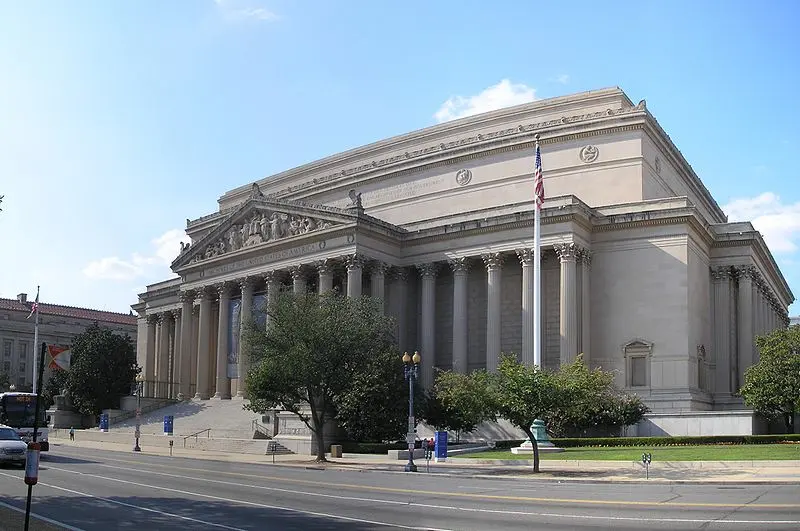
The National Archives Building, Archives I, as seen from Constitution Avenue, Washington D.C.
Opened in 1935, the National Archives, informally referred to as "Archives I," in Washington D.C. houses many significant documents of United States Constitutional History. The main attraction of the site is that visitors can see original copies of the United States Constitution, the Declaration of Independence, and the Bill of Rights - the trifecta of United States Founding Documents.
This "Temple of Founding History" is free and open to the public, and it's located just north of the National Mall at 700 Pennsylvania Ave. in Northwest Washington, D.C.
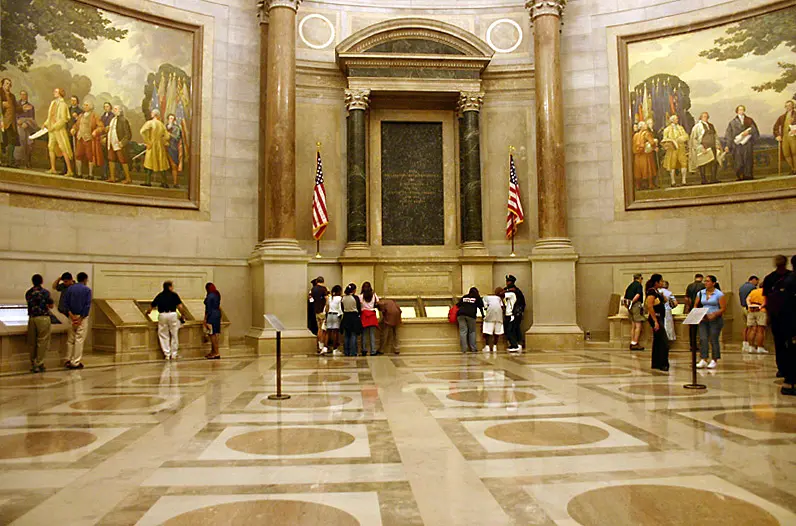
Within the Rotunda for the Charters of Freedom, National Archives
Before 1935, each branch of government was expected to maintain the historic documents of its respective sector's founding history, but this practice led to many of these vestiges of Constitutional History being lost or destroyed. Now, these important papers are kept safe within the Rotunda for the Charters of Freedom (seen above) of the National Archives building.
Alongside the three formative documents listed above, the National Archives hosts the 1297 copy of the Magna Carta, originally signed by Edward I of England, the Louisiana Purchase Treaty (1803), as well as the Emancipation Proclamation (1863).
There are no lines inside the rotunda, and visitors are welcome to roam from document to document at their leisure, lingering over this or that piece of history for as long as they wish. No flash photography is allowed, and the lighting is kept low to preserve the documents from fading. The Declaration of Independence has seen the worst of this fate, and due to severe light exposure during mid-twentieth century, is quite faded. They have done a lot to reverse this degeneration, and the document, so elegantly penned by Thomas Jefferson, has been restored to some degree over the last twenty years.
Also, thanks to the vigilant efforts of the National Archives and Records Administration, many of the documents have been protected from a similar fate, ensuring that future generations of Americans and visitors will have the opportunity to see these formative documents for many years to come.
Images courtesy of Wikimedia Commons, licensed under the Share-Alike license 3.0.



