

The Amendments in History
The Bill of Rights (Amendments 1-10)
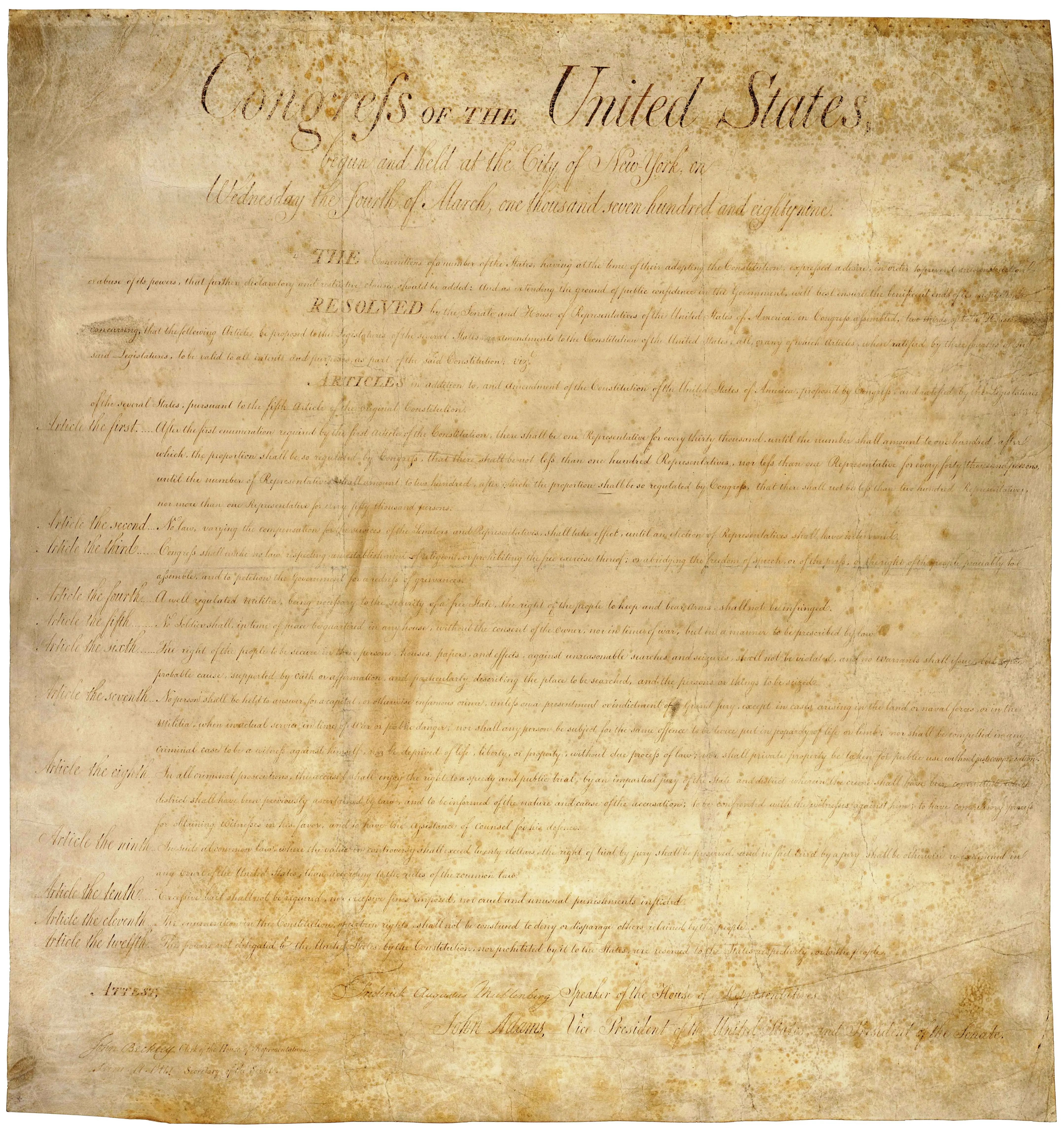
The Bill of Rights
Proposed September 25, 1789; Adopted December 15, 1791
It's almost impossible to imagine the United States (U.S.) Constitution without having a Bill of Rights, but when it was first being drafted, a majority of the Founding Fathers didn't think it was necessary.
However, there were a few men who believed it was so significant that they refused to sign the Constitution because it didn't have one. Three famous refusers were George Mason of Virginia, Elbridge Gerry of Massachusetts, and Edmund Randolph of Virginia.
As it turned out, these three were not the only ones who thought this was an issue. When State ratification messages started arriving with their own commentary and suggestions for individual rights, Congress began to consider the idea of a "Bill of Rights."
James Madison was responsible for drafting the document, and originally wrote 17 sections. This number was whittled down to 12, but only ten of which were ratified by a majority of the States.
These final ten became the first ten Amendments to the United States (U.S.) Constitution.
Sovereign Immunity of States (Amendment 11)
Proposed March 4, 1794; Adopted February 7, 1795
The Eleventh Amendment to the United States Constitution was written as a direct response to the 1793 Supreme Court case known as Chisholm v. Georgia in which a citizen from South Carolina, Alexander Chisholm attempted to sue the state of Georgia over finances. Georgia refused to show up in court, as the leaders felt its being sued in the first place was a violation of its state sovereignty. Despite the complaints of Georgia, the Court ruled in favor of Chisholm.
This amendment clarified Article III, Section 2 of the Constitution and removed federal jurisdiction in cases where citizens of one state or of foreign countries attempt to sue another state.
Of Presidents, Senators, and Members of Congress (Amendments 12, 17, 20, 22, 25, & 27)
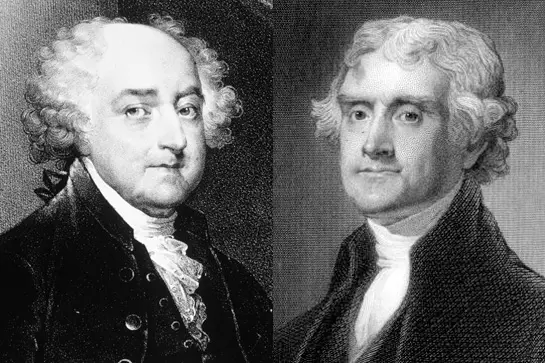
John Adams and Thomas Jefferson
The Twelfth Amendment (Proposed December 9, 1803; Adopted June 15, 1804) changed the way the President and the Vice President were elected. Previously, according to Article I, Section 1, Clause 3 of the Constitution, the individual at the end of the election with the most electoral votes became president, and the first runner up became Vice President. Well, this logic worked excellently until the election year of 1796 when Federalist candidate John Adams was chosen as second President of the United States, and his rival, Thomas Jefferson, became Vice President.
Because Congress feared this sort of development would inspire future "coups" where a Vice President would rise against the President so that he could take his place, the clause was amended. Instead of casting two ballots for the office of the President, electors now cast a single ballot for the President and another for the Vice President. It was a better solution for everybody.
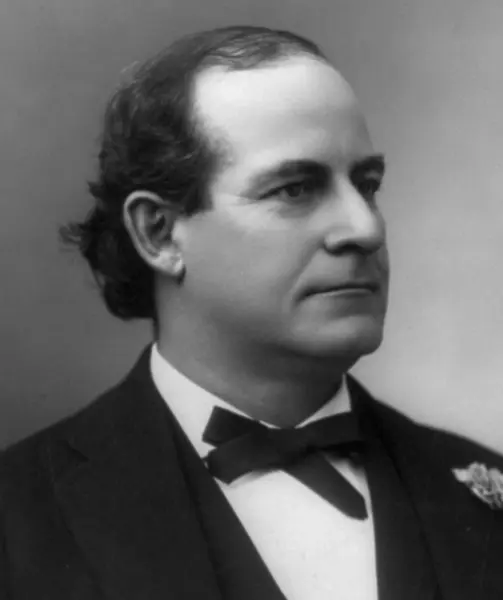
William Jennings Bryan
Amendment Seventeen (Proposed May 13, 1912; Adopted April 8, 1913) established the direct election of senators by popular vote, thanks to the efforts of Progressives like William Jennings Bryan. Previously, in Article I, Section 3, Clauses 1-2 of the United States Constitution, Senators were elected by the legislatures of their states. The Progressives argued that this setup was leading to "legislative corruption" and "electoral deadlocks."
What these reformers were drawing attention to was the rising tendency of Senatorial elections to be "bought and sold," instead of being awarded for merit and competency (an issue brought to the silver screen by director Frank Capra in the film "Mr. Smith Goes to Washington.") Bribery, surprisingly enough, was not uncommon in early twentieth century politics.
The other issue, electoral deadlock, arose because the legislature simply couldn't agree on who to choose. The original method presupposed that they would able to agree on a candidate, but as the history of politics demonstrates, this wasn't likely. Even now, politicians rarely agree on anything. However, thanks to Amendment Seventeen, they no longer have to.
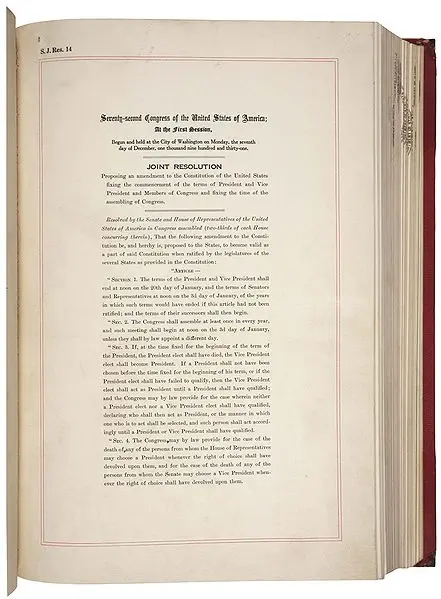
Twentieth Amendment
The Twentieth Amendment (Proposed March 2, 1932; Adopted January 23, 1933) to the United States Constitution shortened the length of time between election day and the beginning of Presidential and Congressional Terms. The Constitution originally provided four months of time between election and active service, with elections in November and terms not beginning until March 4.
In the last part of the Eighteenth century and the early part of the Nineteenth century, this allowed for new leaders to have enough time to prepare for a complete alteration in their lifestyle. As time went on, and transportation and technology became more readily accessible, this lapse of time was no longer entirely necessary. Instead, it became restrictive, as seen in the cases of Abraham Lincoln at the outbreak of the Civil War and Franklin Delano Roosevelt in the early days of the Great Depression.
Thus, Amendment Twenty reduced the frequency of "lame duck" issues in the Presidential, Vice Presidential, and Congressional Offices, and allowed new incumbents to handle any rising crises in a much faster than was before possible after the start of a new term.
In the last part of the Eighteenth century and the early part of the Nineteenth century, this allowed for new leaders to have enough time to prepare for a complete alteration in their lifestyle. As time went on, and transportation and technology became more readily accessible, this lapse of time was no longer entirely necessary. Instead, it became restrictive, as seen in the cases of Abraham Lincoln at the outbreak of the Civil War and Franklin Delano Roosevelt in the early days of the Great Depression.
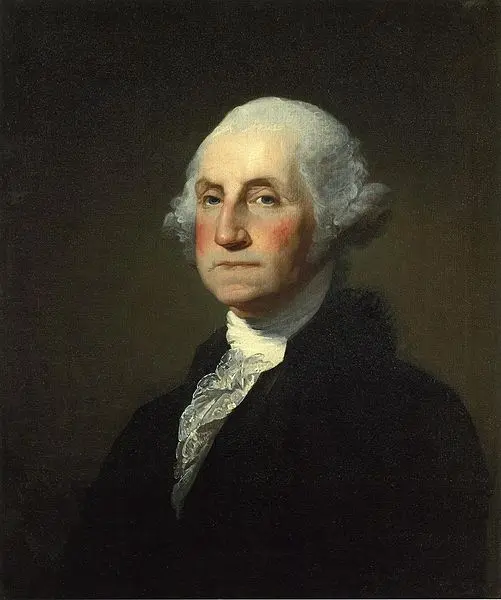
George Washington
The Twenty-Second Amendment (Proposed March 21, 1947; Adopted February 27, 1951) dictated term limits of the President, stating that no person shall be elected more than twice, and if they have already served for more than two years, they cannot be elected more than once. This was a precedent practiced by the Founding Fathers, most famously in the George Washington's Farewell Address of 1796. These men feared that if any man were to exceed two terms in office, it would give him the opportunity to become a despot, which is one of the things they were trying to avoid. They didn't want to leave too much power in the hands of single person.
Few presidents sought out a third term, and those who did (Ulysses Grant, Theodore Roosevelt, Woodrow Wilson, e.g.) were unsuccessful. It wasn't until Franklin D. Roosevelt that the United States had a president who would serve three terms. He had been elected to a fourth, but died in office before its completion. Amendment Twenty-two made it impossible for this to ever happen again.
Amendment Twenty-Five (Proposed July 6, 1965; Adopted February 10, 1967) handles the matter of succession to the Presidency and to the office of the Vice President. Although the issues of successeion had already been settled several times in practice (i.e. The "Tyler Precedent"), Article II, Section 1, Clause 6 remained unclear. The matter had been sitting on the table in Congress for some time, but as more instances of Presidential and Vice Presidential vacancies happened, the issue became a higher priority. Before the new amendment, the office of Vice President had been vacant sixteen times due to the death or resignation of either the President or Vice President, which is no small amount.
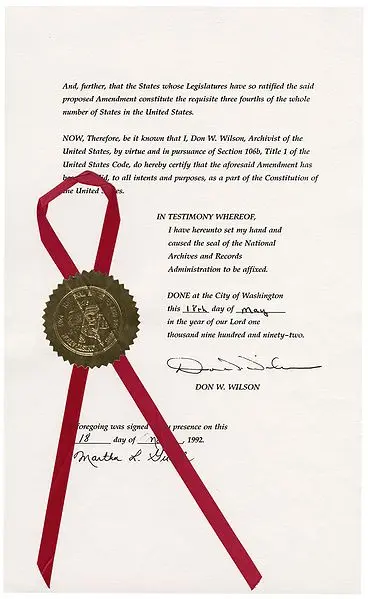
Twenty-Seventh Amendment with Official Seal
The Twenty-Seventh Amendment (proposed September 25, 1789; Adopted May 7, 1992) was one of the earliest Amendments to be proposed, but is the very last to be adopted. James Madison was the one who first proposed the amendment, but since the document had no "expiration date" the States could ultimately ratify it at any point, which eventually they did.
This rationale was backed by the decision of the 1939 case Coleman v. Miller which decided that unless a proposed amendment specified a ratification deadline, it would be open inevitably. Thus, Amendment Twenty-Seven, clarifying that Congressional salaries would not go into effect until the beginning of the next set of terms, was enacted 203 years after it was first proposed.
Civil War Reconstruction (Amendments 13, 14, & 15)
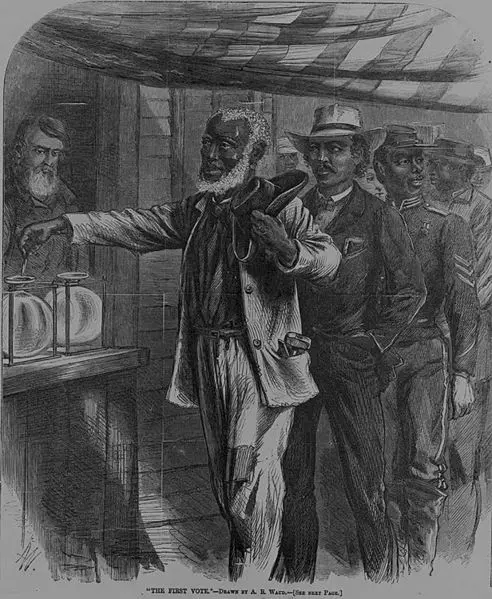
The First Vote for Newly Freed Americans
This group of Amendments are referred to as the "Reconstruction Amendments," as they were adopted in the aftermath of the United States Civil War. These amendments were monumental, because where the Bill of Rights protected the people from the federal government, Amendments 13, 14, and 15 protected them from the government of their states.
The Thirteenth Amendment to the U.S. Constitution ended slavery in the United States. Although President Abraham Lincoln's 1863 executive order, the Emancipation Proclamation, freed slaves in the Confederate States during the war, it did not go as far as to outlaw slavery and involuntary servitude entirely. Until the amendment was enacted, they weren't yet free men and women.
When Amendment Thirteen was adopted, making slavery illegal in the United States, it became the first new Amendment to be adopted in 60 years. However, it didn't end the issues in the states, a series of "Black Codes" were introduced, mainly in the South, forcing Congress to add two more amendments.
Amendment Fourteen (Proposed June 13, 1866; Adopted July 9, 1868) was the second of the three Reconstruction Amendments and came in three parts: The Citizenship Clause, The Due Process Clause, and the Equal Protection Clause.
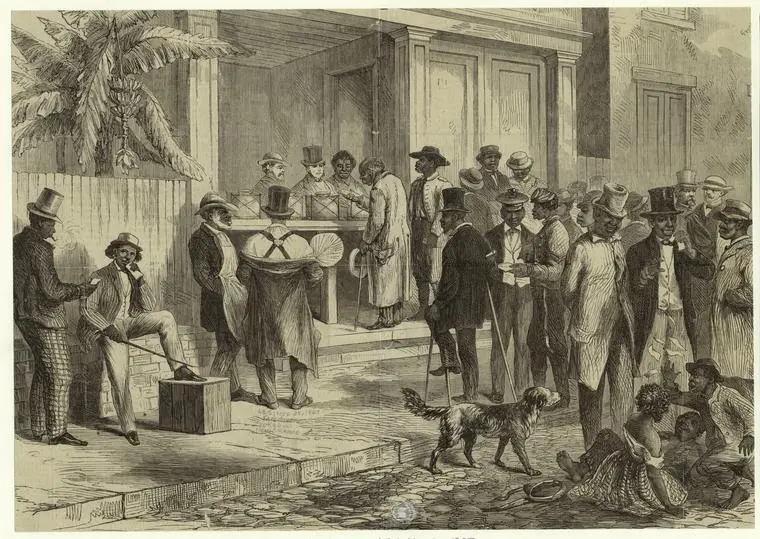
Freed Slaves Vote in New Orleans
Even though the Emancipation Proclamation had freed the slaves, and the Thirteenth Amendment had secured their freedom, many individuals and organizations throughout the United States continued to treat Black Americans as if they didn't belong, like the color of their skin continued to make them inferior regardless of their new Constitutional liberties. This is because they were emancipated, but not yet full citizens.
The Fourteenth Amendment was enacted as a direct response to the serious issues free black men and women were facing under the "Black Codes." The decision of the 1857 Supreme Court Case Dred Scott v. Sandford stated that slaves were neither protected by the Constitution, nor were they U.S. citizens. As it turned out, this historic case went down in history as the worst Supreme Court decision ever made, and the Citizenship Clause reversed the Dred Scott Decision declaring that all persons born or naturalized in the United States, regardless of race or ethnicity, would be citizens.
The Due Process Clause and the Equal Protection Clause were in the same vein, protecting the rights of life, liberty, and property of all United States citizens. Under the Black Codes, newly free men and women had no guarantee that their property wouldn't be seized or that they would not be arrested on arbitrary grounds. The Due Process Clause gave them the confidence that they too were protected by the Constitution, and the Equal Protection Clause ensured equal protection under the laws of the state.
The last of the Reconstruction Amendments, The Fifteenth Amendment (Proposed February 26, 1869; Adopted February 3, 1870) gave all male citizens of the United States, regardless of "race, color, or previous condition" of servitude the right to vote.
Women would not have the right to vote until 50 years later.
Income Tax (Amendment 16)
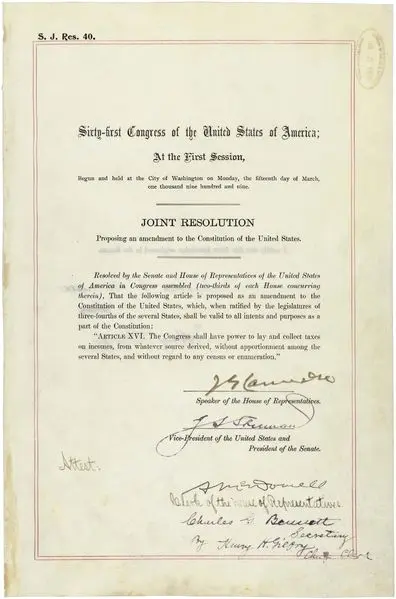
Income Tax Amendment
Proposed July 12, 1909; Adopted February 3, 1913
The Sixteenth Amendment to the United States (U.S.) Constitution gave Congress the right to collect income tax without basing it on population. This Amendment has been the target of a great deal of criticism over the last 100 years, but these objections haven't stood up in court. So, the Sixteenth Amendment will most likely be around for many years to come.
The Short Reign of Prohibition (Amendments 18 & 21)
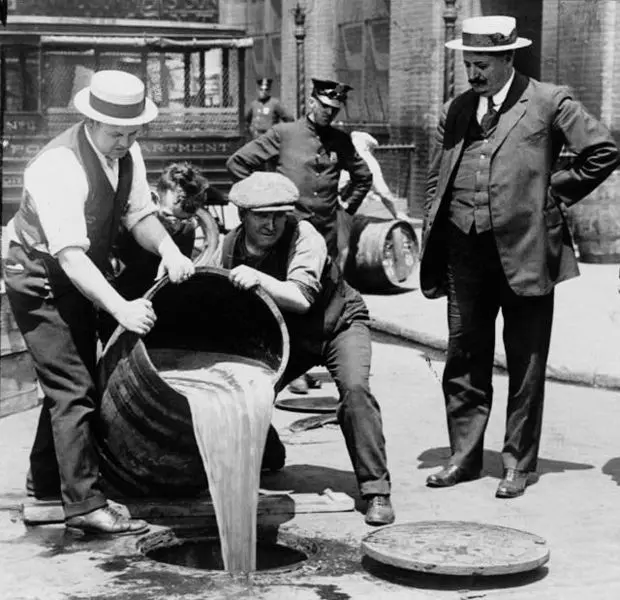
Three Men Pour Alcohol into the Streets during Prohibition
The Eighteenth Amendment (Proposed December 18, 1917; Adopted January 16, 1919) effectively outlawed the alcohol industry. Once the amendment was adopted, nobody could buy, sell, or manufacture alcoholic drinks; but that didn't mean they couldn't drink it. It was called Prohibition, one of the most peculiar times in American history.
It all started with the efforts of organizations like the Women's Christian Temperance Union and the Anti-Saloon League. These groups managed to convince the federal government of the "corruption" of the sale of alcohol, explaining it as a cause of the rise of domestic violence and saloon inspired political corruption. Support for Prohibition was strongest in the South, where conservative Christianity played a large role.
Even after the Amendment was enacted in 1919, along with the Volstead Act in October of that same year, the alcohol industry didn't stop. Instead, it just went underground. Rumor has it that anywhere between 30,000 and 100,000 speakeasies open up in New York City alone. Chicago was another hot spot for the underground manufacture and sale of alcohol, which was overseen by the famous gangster Al Capone.
With crime getting out of hand, and police authorities unable to gain control over the situation, Congress proposed and adopted the Twenty-First Amendment (Proposed February 30, 1933; Adopted December 5, 1933). This amendment repealed the Eighteenth Amendment and the Prohibition of Alcohol, becoming the first amendment, and the only one to date, to repeal a previous amendment.
Voting Rights and Restrictions ( Amendments 19, 23, 24, and 26)
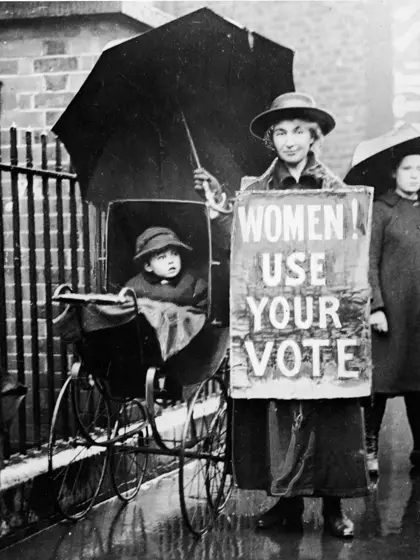
Suffragettes Encourage Women to Vote
After 50 years of waiting, women finally got the right to vote in the United States with the Nineteenth Amendment (Proposed June 4, 1919; Adopted August 18, 1920). This development came from the work of the Suffragettes in the Women's Rights Movement of the early twentieth century. Famous Suffragettes Susan B. Anthony and Elizabeth Cady Stanton led the movement, and together they drafted the amendment which would become Amendment Nineteen: "Universal Suffrage."
Amendment Twenty Three (Proposed June 16, 1960; Adopted March 29, 1961) address the voting rights of a different group of people, namely the residents of the nation's capitol: the District of Columbia. Before the enactment of this amendment, people living in Washington D.C. were forbidden to vote for the President or Vice President, as they had no representation in the electorate. Now, like the state with the smallest population, Wyoming, each election D.C. residents have three electoral representatives.
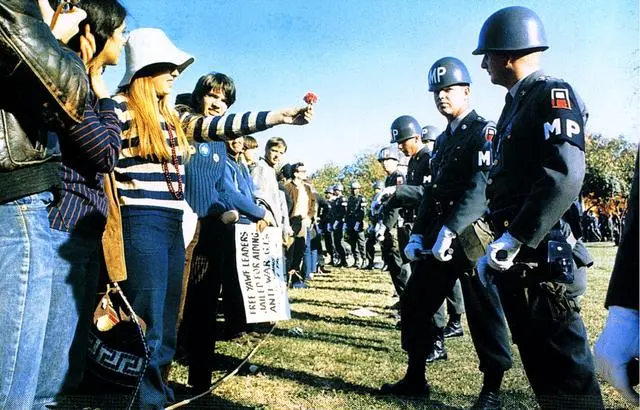
A Vietnam War Protestor Gives a Flower to Soldier
The Twenty-fourth Amendment (Proposed September 14, 1962; Adopted January 23, 1964) further protects the votes of free men and women by forbidding Congress and the States from charging poll tax for voting. Similar to the Black Codes of the Reconstruction era, Poll Taxes were commonly used to keep black Americans from voting. The timing of Amendment Twenty-Four's adoption coincides with the Civil Rights Movement of the 1960s, when attention was on the unequal treatment of black American citizens in many of the Southern states.
The final act of Congress to date regarding voting rights and restriction is the adoption of Amendment Twenty-Six (Proposed March 23, 1971; Adopted July 1, 1971). At that time, massive protest movements against the Vietnam War had swept the nation's colleges and universities. Prior to the adoption of this amendment, men were being drafted into service before they were even legal to vote. They were risking their lives without having any bearing on the actions of the men sending them to do so. Thus, the amendment set the voting age at 18, forbidding Congress or the States to set it any higher.
*All Images are courtesy of Wikipedia commons - licensed under Creative Commons Attribution-Share- Alike License 3.0.



