

The Papers of James Madison
Unlike the large amount of documentation surviving George Washington and Thomas Jefferson, relatively few papers exist to grant insight into James Madison's personal life. Madison didn't attempt to keep many of these private documents, and whether from humility or another unknown reason, he didn't think they would be of any importance to history. The few scattered documents which remained survived through the efforts of family and collectors.
Fortunately, Madison did manage to keep many of his public papers. He recognized the possibility that these documents would have some importance to future American scholarship, and arranged and organized them for this purpose. Among the most prominent records remaining are his notes on the debates of the 1780's and many of his letters and other papers concerning public affairs of that decade, including his notes on the proceedings of the Federal Convention of 1787. He admitted that his purposes for retaining these records were that their sale and distribution would provide for his wife, Dolley Payne Todd Madison, after his death.
The Papers of James Madison project, housed at the University of Virginia, was established in 1956 to publish annotated volumes of the correspondence and writings of James Madison, the Virginia statesman most often remembered as the Father of the United States Constitution.
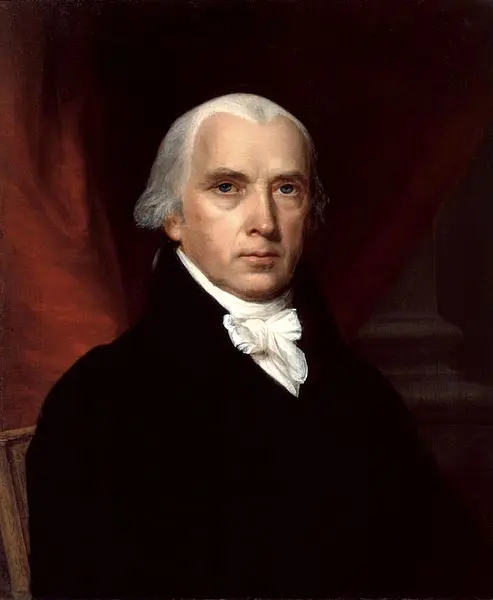
Portrait of James Madison by John Vanderlyn, 1816
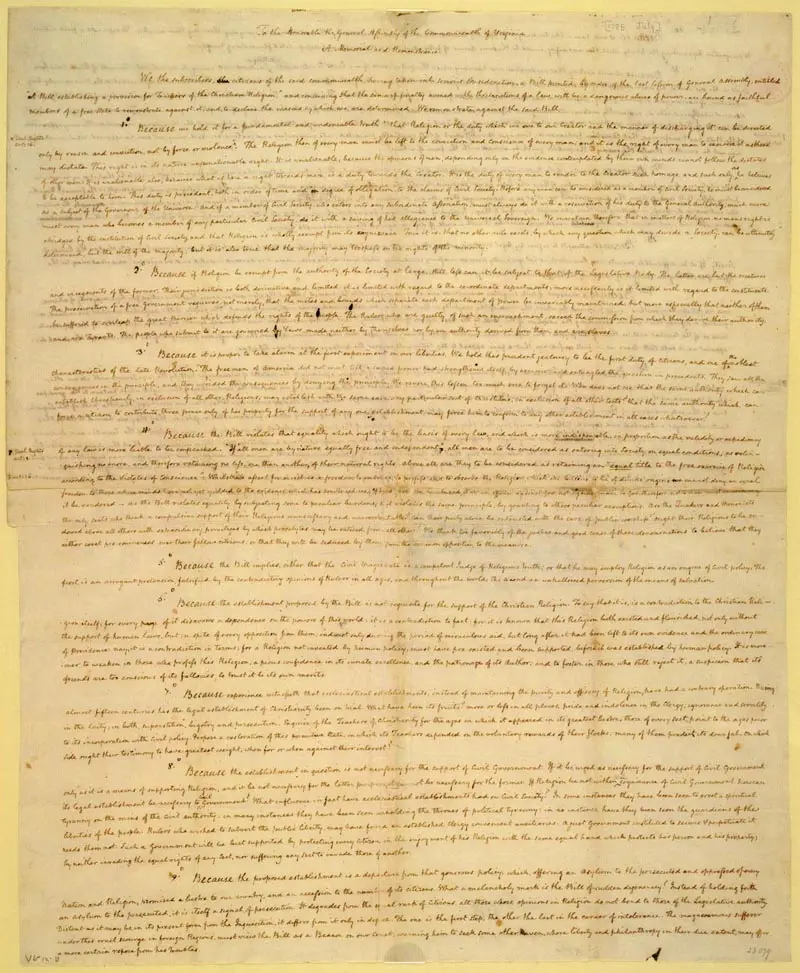
James Madison's Handwritten Notes on the Constitutional Convention
Images courtesy of Wikimedia Commons, licensed under the Creative Commons Share-Alike License 3.0



